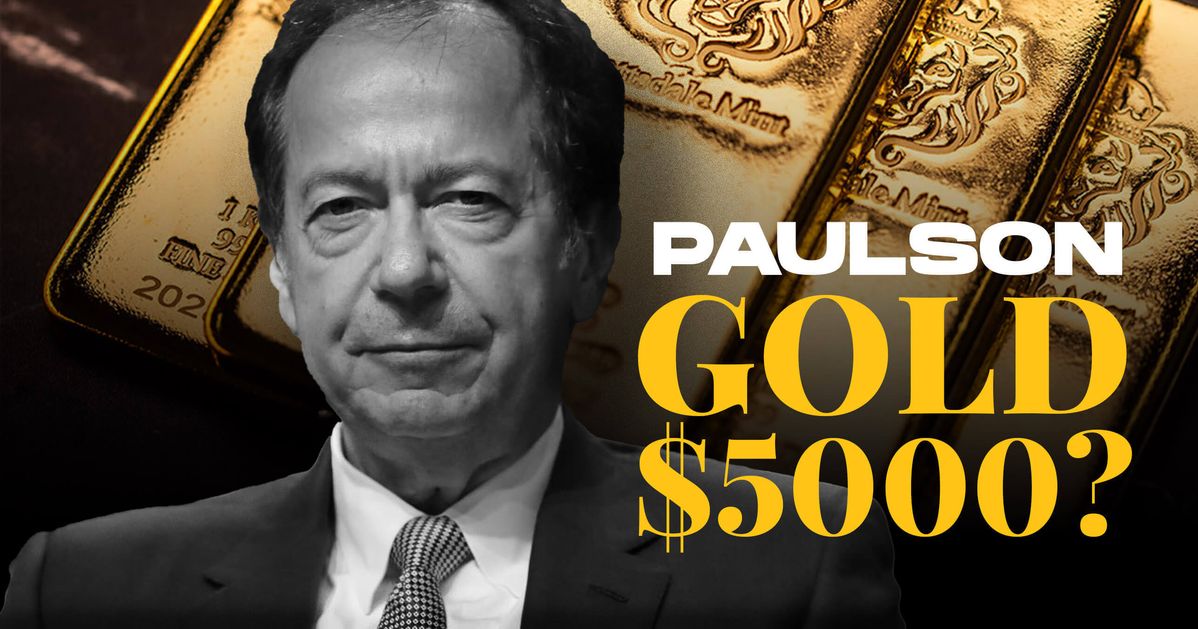
Billionaire investor John Paulson, in a recent interview dated April 29th according to Reuters, has reaffirmed his bullish stance on gold, projecting a price near $5,000 per ounce by 2028. His thesis is anchored in a potent mix of sustained central bank accumulation and rising global trade tensions that, in his view, are eroding trust in U.S. dollar reserves.
Speaking in a recent interview, Paulson described a forecast presented to him of gold reaching the “high $4,000 range” within three years as “reasonable” and “well-informed.” He framed the metal as the most logical reserve alternative in a world grappling with financial weaponization and geopolitical fragmentation.
“As central banks and people look to put their money in a more stable source… I think gold will increase its position in the world,” Paulson said.
His comments come as a growing number of institutions upgrade their own forecasts in the wake of gold’s record move above $3,500 last week. Deutsche Bank, for example, now sees gold at $3,700 by 2026—less aggressive than Paulson, but directionally aligned.
Strategic Positioning
Paulson is not merely speculating. He has been allocating significant capital to physical gold development assets. Already the top shareholder in Perpetua Resources, an Idaho-based gold and antimony developer, Paulson recently acquired a 40% stake in Alaska’s Donlin gold project from Barrick Gold.
This positions him in two of the few large-scale North American gold projects with federal permits and political backing—both strategically aligned with domestic supply chain reindustrialization goals. Perpetua, notably, has applied for U.S. Export-Import Bank financing and previously received support during Trump’s presidency.
The Geopolitical Bid for Gold
Paulson pointed to a critical inflection point: the Western seizure of Russia’s foreign reserves following its invasion of Ukraine. That action, he said, sent a clear message to non-aligned central banks—particularly China—that their dollar reserves could become liabilities in a geopolitical conflict.
“When the war started, [Russia] kept their physical gold—that was safe—but all their cash reserves were confiscated,” Paulson explained. “That caused other central banks to wake up and say… ‘What happens if there’s a conflict with the U.S.?’”
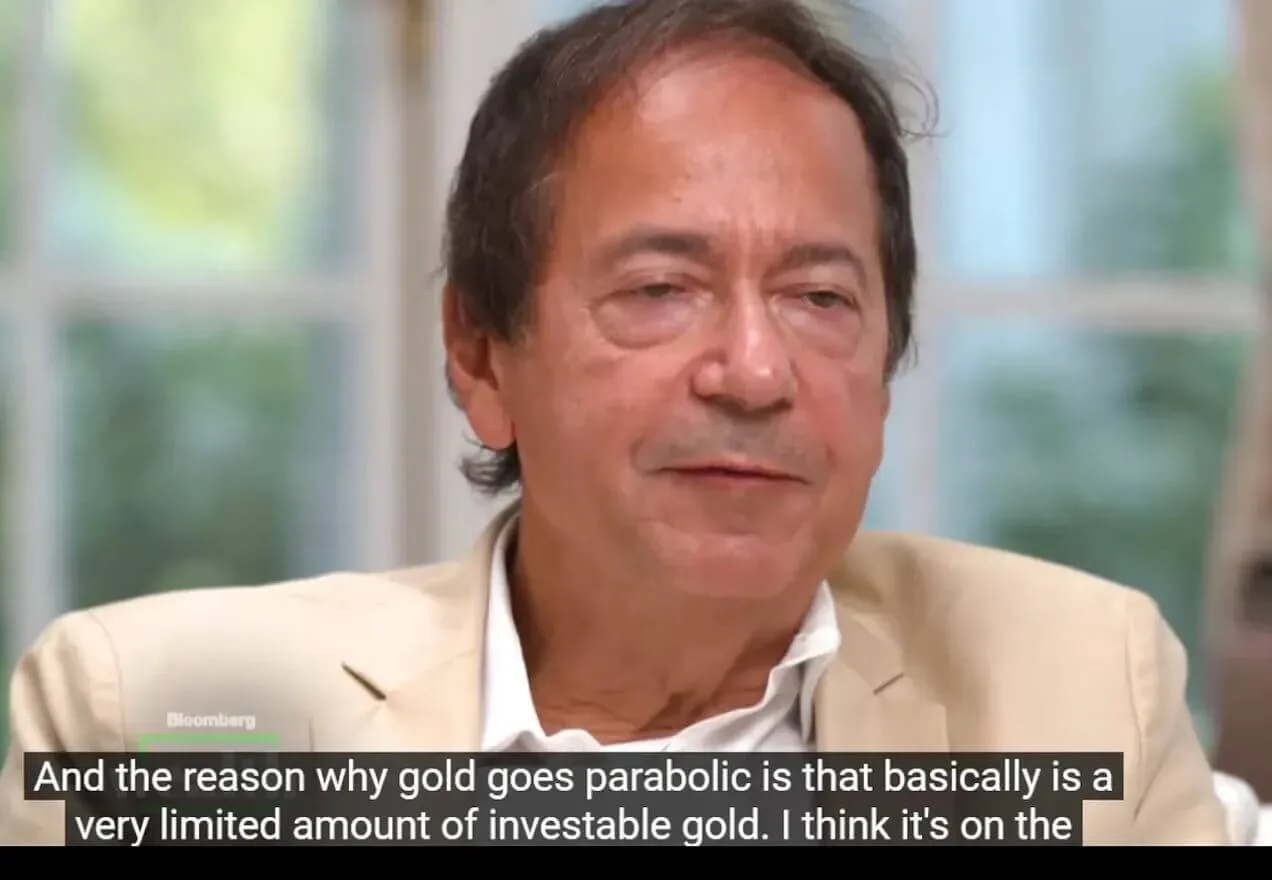
In this context, gold is regaining credibility not just as an inflation hedge or diversification tool, but as a neutral reserve asset immune to sanctions and counterparty risk.
Dollar Doubts, Trade Wars, and Gold’s Reserve Role
Paulson also sees tariffs and deglobalization—hallmarks of the Trump-era trade architecture—as durable drivers of gold demand. As confidence in the U.S. dollar declines, the argument for gold as a reserve currency strengthens.
“The best place to go if your faith in the dollar diminishes is gold as a reserve currency,” he said.
While Paulson declined to elaborate on discussions with former President Trump, he praised Trump’s stance on reshoring and resource nationalism, calling it “very pro on America First and the golden age of America.”
No Diversification into Copper or Lithium—for Now
Bottom Line
Paulson’s forecast is not just a price target—it reflects a strategic worldview. The rising global demand for gold is not speculative froth, in his view, but rather a rational response to rising monetary uncertainty, deteriorating trust in fiat reserves, and the return of geopolitical risk to capital allocation. His bets in Idaho and Alaska suggest that the next leg of gold’s ascent may be rooted less in ETFs or futures, and more in hard assets and domestic supply.

John Paulson: Background and Significance
John Paulson is a billionaire investor and hedge fund manager who gained worldwide recognition during the 2008 financial crisis when he made approximately $4 billion personally by betting against the subprime mortgage market. As the founder of Paulson & Co., he became famous for what many consider one of the greatest trades in financial history.