
China’s $200B Gold Discoveries Could Reshape Global Markets
In a series of announcements over the past six months, Chinese state media has reported the discovery of multiple major gold deposits across the country, potentially positioning China to significantly increase its domestic gold reserves at a time when global prices are reaching record highs.
Record-Breaking Discoveries
The most recent announcement came just last week when Chinese scientists claimed to have discovered two potentially massive gold deposits, each estimated to contain approximately 1,000 tonnes (32.15 million troy ounces) of gold. At current market prices of around $3,100 per troy ounce, each deposit could be worth nearly $100 billion.
The announcement described these deposits as being located in “central and northeastern China,” though it’s unclear whether the central China deposit refers to a new discovery or further confirmation of previous findings.

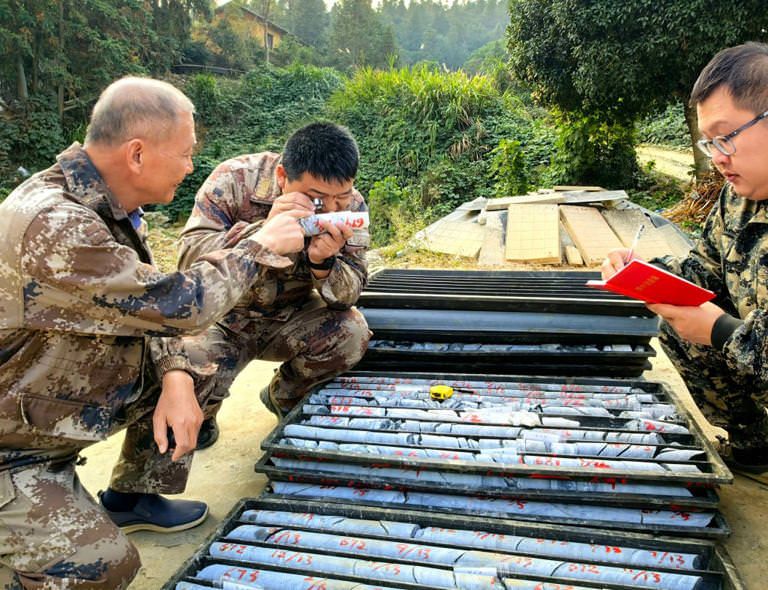
This follows a November 2024 report from the Hunan Academy of Geology, which identified more than 40 gold ore veins at the Wangu gold mine in Pingjiang county, Hunan province (located in central China). The core exploration area reportedly contains 300.2 tonnes (9.65 million troy ounces) of gold resources, valued at approximately $30 billion.
November 2024 Discovery:
- Location: Wangu gold mine, Pingjiang county, Hunan province (central China)
- Known reserves: 300.2 tonnes / 9.65 million troy ounces
- Estimated value: $30 billion (at $3,100/oz)
- Potential total reserves: Over 1,000 tonnes / 32.15 million troy ounces at depths beyond 3,000 meters
- Potential total value: $100 billion (at $3,100/oz)
January 2025 Discoveries:
- Location 1: Anbali, Gansu province
- Reserves: 102.4 tonnes / 3.29 million troy ounces
- Value: $10.2 billion (at $3,100/oz)
- Location 2: Hadamengou, Inner Mongolia autonomous region
- Reserves: 41.3 tonnes / 1.33 million troy ounces
- Value: $4.12 billion (at $3,100/oz)
- Location 3: Tahe Baoxinggou, Heilongjiang province
- Reserves: 24.3 tonnes / 781,000 troy ounces
- Value: $2.42 billion (at $3,100/oz)
March 2025 Discoveries:
- Location 1: Unspecified location in central China (possibly same as Wangu mine)
- Estimated reserves: Approximately 1,000 tonnes / 32.15 million troy ounces
- Estimated value: $100 billion (at $3,100/oz)
- Location 2: Unspecified location in northeastern China
- Estimated reserves: Approximately 1,000 tonnes / 32.15 million troy ounces
- Estimated value: $100 billion (at $3,100/oz)
Technological Advances in Exploration
Chinese authorities attribute these discoveries to new exploration technologies, including 3D geological modeling, big data, and advanced computing capabilities. The China Geological Survey (CGS), a division of the Ministry of Natural Resources, has focused efforts on 24 existing large-scale gold resource bases using these advanced technologies.
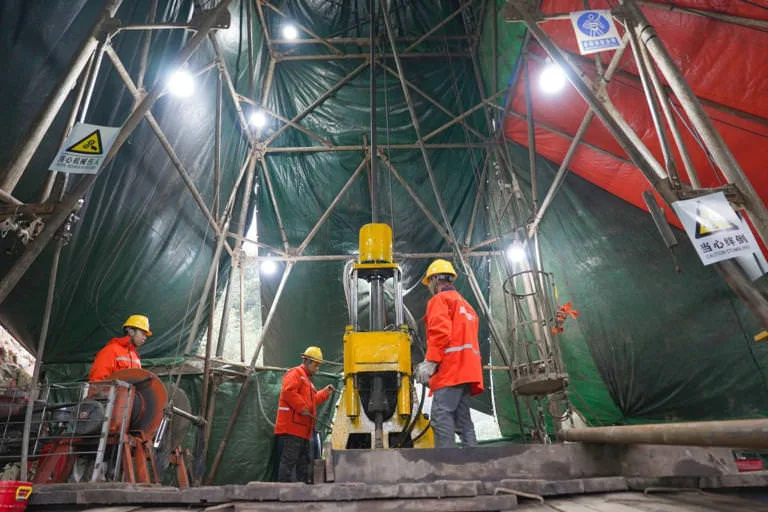
Liu Yongjun, vice head of the Geological Bureau of Hunan Province, cited 3D geological modeling as a key factor in the discoveries at the Wangu gold field, adding that gold was also found during drills around the site’s peripheral areas, suggesting further potential.
Strategic Importance
These discoveries align with China’s 2021-2025 development plan, which calls for increased efforts to bolster domestic mineral reserves and production. While China is currently the world’s largest producer of gold ore, with an output of 377 tonnes in 2024, it lags behind countries such as South Africa, Australia, and Russia in proven gold mine reserves.
The significance of these discoveries extends beyond economic value. Gold plays a crucial role in insulating financial systems from the vulnerabilities of fiat currencies and has applications in electronics and aerospace components due to its unique properties.
International Expansion
Simultaneously, Chinese firms are expanding their gold mining operations in Africa according to Chinese media reports, particularly in South Africa and Ghana, the continent’s two largest gold exporters.
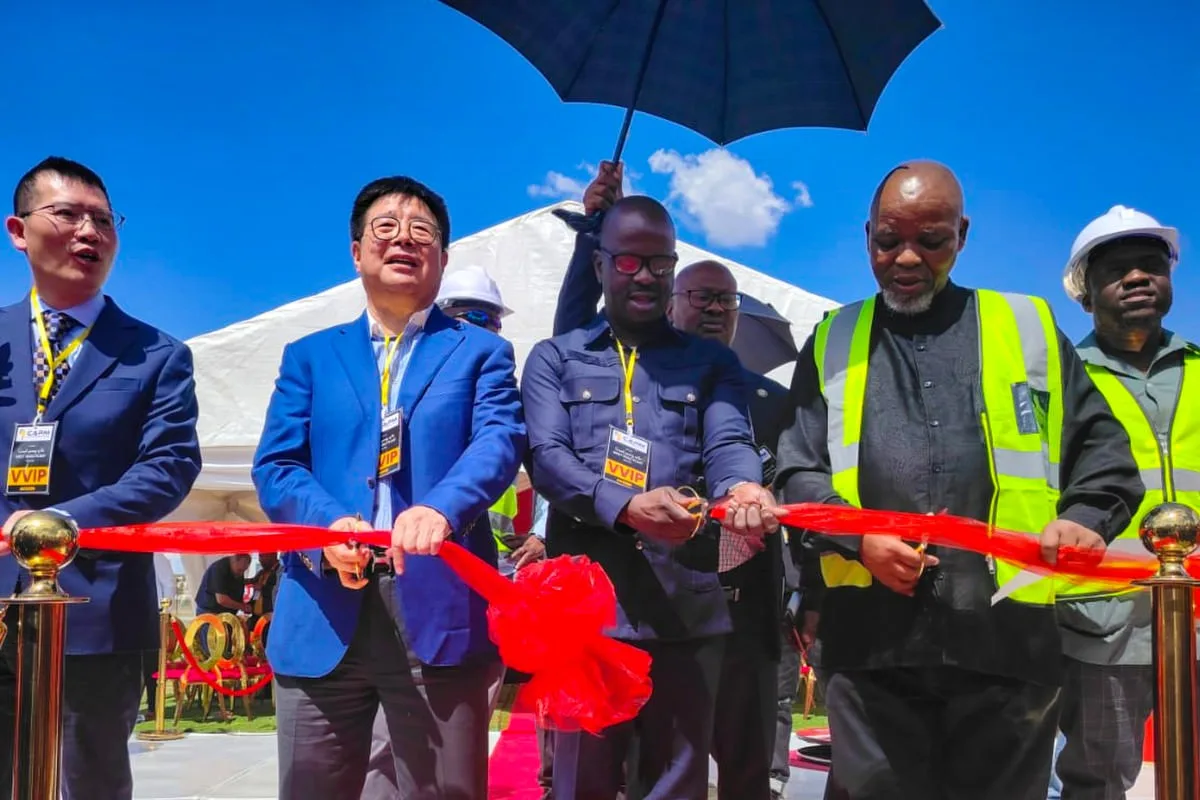
In South Africa, China-African Precious Metals Company (CAPM), a subsidiary of Shanghai Stock Exchange-listed Pengxin International Mining, recently opened a refurbished gold processing plant in Orkney. The facility is part of a 2 billion rand (approximately $111 million) investment in mining operations in South Africa’s North West province.
The Chinese firm invested 200 million rand ($11 million) in revitalizing the gold processing plant, creating nearly 4,000 jobs. The mine is strategically located in South Africa’s Witwatersrand basin, home to one of the world’s largest known gold reserves.
Market Context
These developments come as gold prices have rallied significantly due to increasing global geopolitical tensions. The most active gold futures contract on the Shanghai Futures Exchange touched an all-time high of 639.48 yuan per gram in October 2024, and prices have continued to climb in 2025.
Expert Perspectives
Despite the impressive scale of these announcements, some experts have expressed skepticism regarding the reserve estimates. The distinction between identified resources and economically extractable reserves remains a critical factor in determining the true value of these discoveries.
According to World Gold Council data, China consumed 741.732 tonnes of gold in the first three quarters of 2024, while domestic production reached only 268.068 tonnes during the same period.
As global economic uncertainties persist and demand for gold continues to rise, China’s strategic push to secure both domestic and international gold resources positions the country to strengthen its influence in the global precious metals market.
Note on Reports: These figures come from Chinese state media, which often lacks transparency and independent verification. Claims about massive gold reserves should be viewed with healthy skepticism, as state media may exaggerate findings for economic or geopolitical purposes without providing crucial details about extraction feasibility or actual recoverable amounts.


