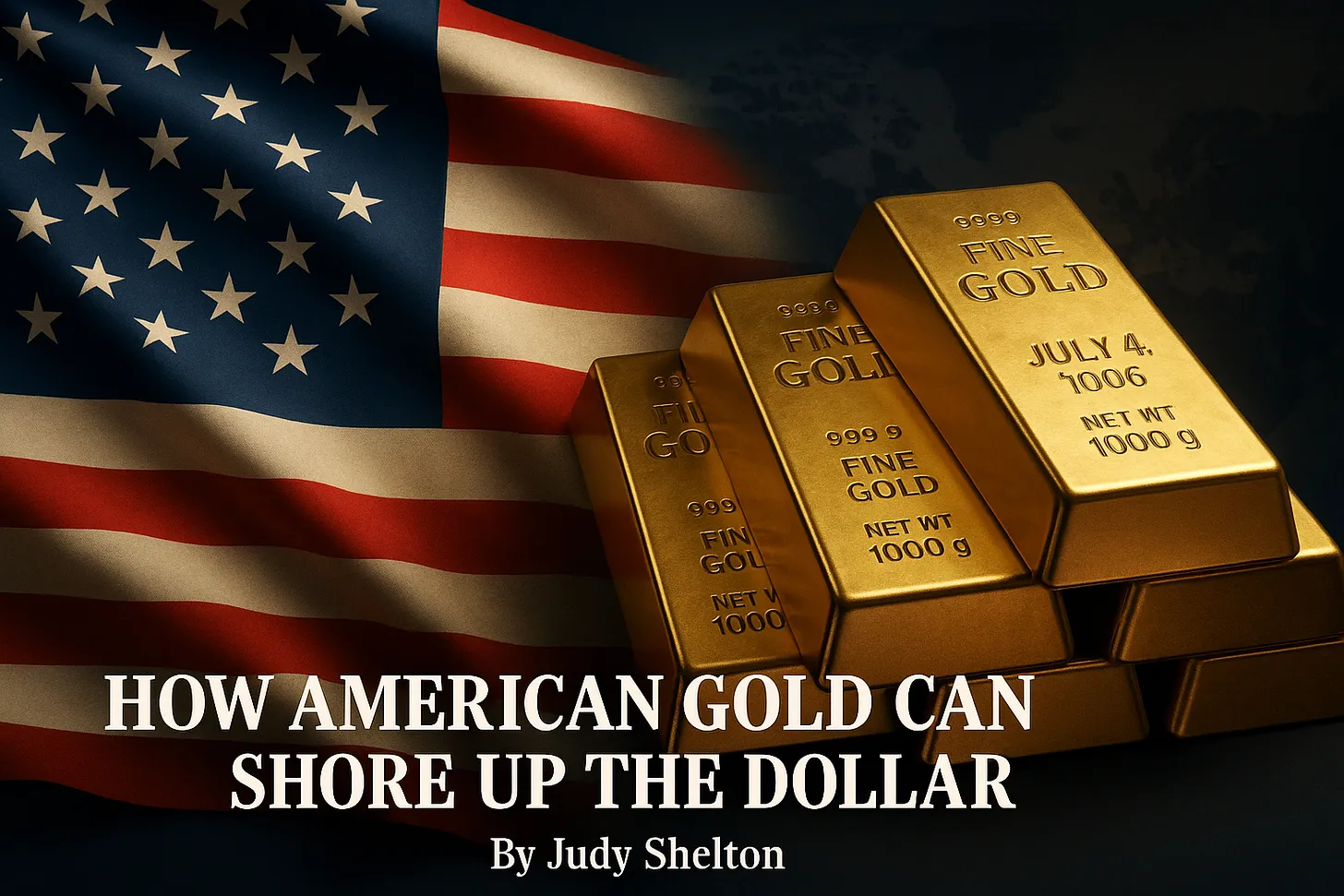
How American Gold Can Shore Up the Dollar
By Judy Shelton for the Wall Street Journal
The U.S. Treasury has been intervening in currency markets to stabilize the Argentine peso against the dollar. The goal is to support President Javier Milei’s free-market reforms by providing Argentina with a solid monetary foundation. No nation can prosper when concerns over the soundness of its fiscal policies and debt burden undermine confidence in its money.
Rescuing Argentina’s currency can help secure the economic future of the Western Hemisphere. But it’s even more important that the U.S. protect the validity of its own currency. The trustworthiness of the dollar is imperative for U.S. political and economic leadership in the world.
President Trump has made clear he intends to protect the U.S. dollar’s pre-eminent role in facilitating global payments. The dollar’s legacy has advantages: The postwar international monetary system was anchored by a gold-convertible dollar. Under the rules-based Bretton Woods system from 1944 through 1971, nations conducted international trade in accordance with a level monetary playing field; participating countries weren’t allowed to manipulate their currencies to gain an unfair export advantage.
This system worked well. According to the 2015 Economic Report of the President, the Bretton Woods era coincided with tremendous growth in labor productivity and middle-class income, reduced income inequality and increased workforce participation.
To achieve similar outcomes today, could the U.S. use its gold reserves to establish a benchmark for dollar stability by guaranteeing the monetary integrity of a long-term U.S. Treasury bond?
Fearing currency erosion, many investors are making “debasement trades” by shifting from dollars to hard assets. The Trump administration could counteract this dangerous trend by introducing a U.S. Treasury security offering gold convertibility at maturity. It would be a power move that would throw those nations aspiring to attain global reserve-currency status off their game. In particular, it’s vital that the U.S. one-up China.
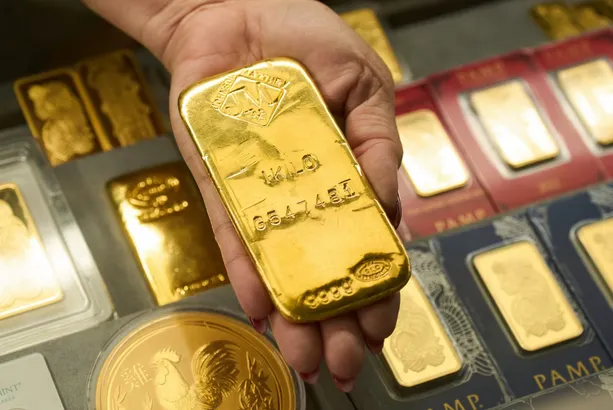
Planting the flag for sound money doesn’t require backing all U.S. debt obligations with gold, which would be impossible. But some backing can happen. The U.S. government’s gold holdings are the largest in the world at 261,498,927 fine troy ounces, or about 8,133.5 metric tons. Even though other nations’ central banks have aggressively bought gold in recent years—with Turkey, India and China topping the list—the U.S. lead in total holdings is solid. According to the World Gold Council, America’s official gold reserves are more than twice those of the next largest, Germany’s.
The total book value of gold as an asset on the U.S. government’s balance sheet is $11 billion, as the result of a statutory price of $42.22 an ounce set in 1973. This suggests that the U.S. government has an opportunity to realize a windfall profit by assigning gold holdings as collateral for gold-backed bonds issued by the U.S. Treasury. At current market value, U.S. gold holdings are worth around $1.1 trillion.
America should take advantage of its strong position while the price of gold has achieved significant gains. By issuing a dollar-denominated Treasury bond that offers gold convertibility at maturity, the administration would set a prominent marker for sound money at home while alerting the world that the U.S. intends to take the lead in setting up monetary arrangements among trade partners that are more coherent.
Skeptics will brand the idea a gimmick. It would certainly be a novelty. But Mr. Trump doesn’t shrink from capturing worldwide attention and might exult in being recognized as the first U.S. president to restore any kind of gold backing to the dollar since Richard Nixon ended Bretton Woods more than 50 years ago.
Mr. Trump has criticized currency manipulation in global trade relations. Challenging other nations to emulate the U.S. by guaranteeing some portion of their sovereign debt in gold would demonstrate America’s vision for stable money as the proper foundation for fair trade.
Given that inflation remains a major concern for Americans, one might reasonably anticipate that this century’s maiden issuance of a long-term U.S. Treasury bond with a gold convertibility feature—say, on July 4, 2026—would be oversubscribed by investors willing to pay a substantial premium. Besides furnishing an inexpensive means of federal government borrowing, it would provide valuable information to the Federal Reserve on expectations of future dollar purchasing power—akin to comparing yields on Treasury inflation-protected securities with conventional Treasury instruments.
If it takes an audit of Fort Knox to verify the gold, so be it. Trust in the American idea requires trust in the American government. What better way to launch America’s new Golden Age?
Ms. Shelton is a senior fellow at the Independent Institute and author of “Good as Gold: How to Unleash the Power of Sound Money.”